Machining Transformation (MX) as the driving force behind component manufacturing for the semiconductor market
CNC contract manufacturers or system suppliers looking to enter or expand in the semiconductor market face an unusual combination of challenges: extremely long cycle times, tight tolerances in the single-micrometer range, extremely smooth surfaces, and, at the same time, cleanroom requirements down to very low particle counts in accordance with ISO standards. This means that disruptions, defective components, or insufficient data sets in the process chain directly lead to higher costs and increased scrap rates.
At the same time, semiconductor OEMs expect scalable production volumes, reproducible flexibility in product variants, and manufacturing that requires as little manual labor as possible. Traditional standalone machines with separate process steps quickly reach their limits in this context. Or, to put it more specifically: without integrated automation and an integrated process chain, precision, reproducibility, cleanliness, and delivery reliability are difficult to achieve.
Machining Transformation (MX) – Four pillars, one goal
The Machining Transformation (MX) strategy describes the integrated interplay of process integration, automation, Digital Transformation (DX), and Green Transformation (GX). For a CNC operation in the semiconductor industry, three points in particular have an immediate impact:
Process Integration: Combining milling, turning, grinding, and in-process measurement on a single machine reduces setup errors, shortens cycle times, and lowers the risk of collisions and contamination.
Automation: Pallet handling systems and automated guided vehicles decouple machine uptime from staff availability, enabling unmanned night and weekend shifts during long machining cycles.
Digital Transformation (DX): End-to-end connectivity, CAD/CAM integration, planning, monitoring, and software-integrated machine tools connect the shop floor with the digital process chain, making the complexity described above manageable in the first place.
The Green Transformation (GX) is a direct result: eliminating rework, avoiding scrap parts, and ensuring stable process runs save energy, materials, and cleaning costs. Given the high cost of workpiece materials in the semiconductor industry (e.g., silicon carbide) and high-purity process fluids, this also translates into significant cost savings.
Challenges in the "Data & Semiconductor" Target Market
For CNC companies, the specifics of this market are not only subject to “tighter tolerances,” but are also qualitatively different:
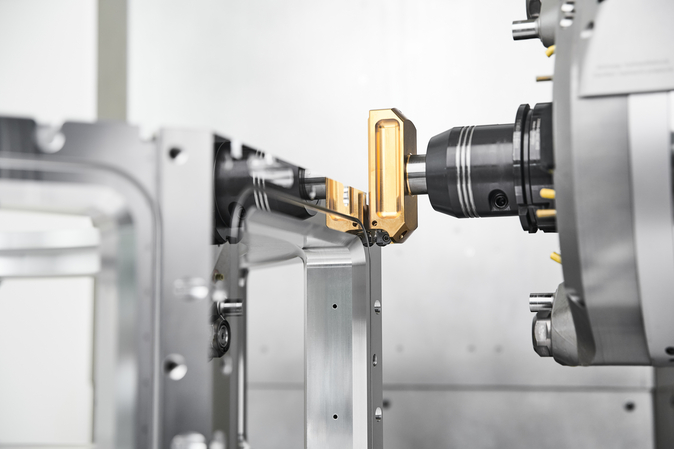
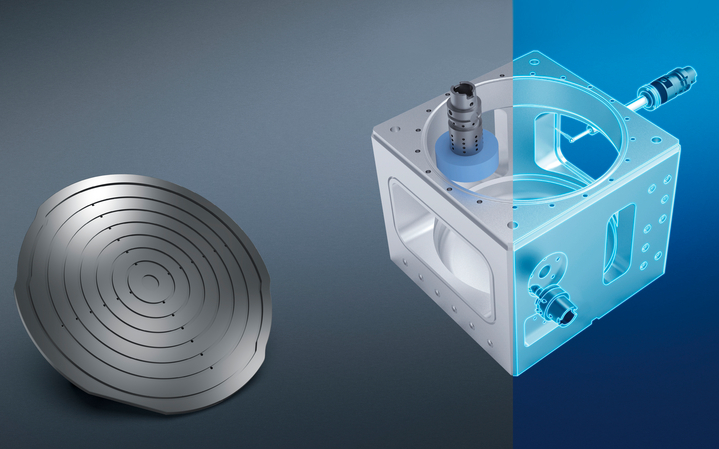
Component properties: Process chamber housings with diameters ranging from several hundred to over 1,000 mm, complex milled and turned geometries, functional surfaces for the “showerhead,” wafer holders, and connections for power and vacuum supply.
Workpiece requirements: Tolerances in the range of a few micrometers; surface roughness often below Ra 0.1 µm.
Environmental conditions: These components will eventually be used in systems that must meet ISO cleanroom standards with extremely low particle limits; even a single fingerprint can render a component unusable.
Volume and wear: So-called etching processes (wet and dry etching) and chemically aggressive media cause significant wear and frequent replacement cycles in machined components.
This exacerbates the classic trade-offs in CNC operations: precision versus productivity, surface finish versus chip volume, product variety versus a stable production process, and staffing requirements versus 24/7 operation.
The Role of Automation in the Semiconductor Industry
Machining cells with a cycle time of around eleven hours do not require constant supervision by an operator “at the machine.” Instead, the bottleneck shifts to setup and programming times, as well as floor logistics. This is precisely where DMG MORI’s automation solutions come into play in the semiconductor context. These include, among others:
Pallet systems (z. B. LPP) enable the distribution of housing variants across multiple machines, with up to several dozen pallet positions and multiple setup stations.
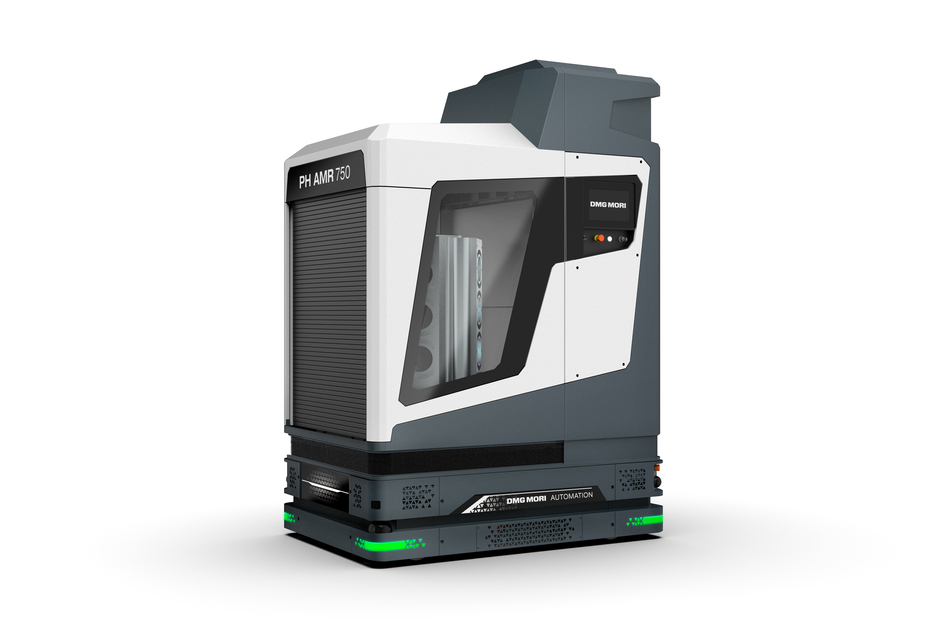
Automated guided vehicles (such as PH-AMR) decouple pallet logistics from a fixed layout; routes, buffers, and priorities can be modified via software, which is crucial for new housing variants or OEM requirements.
Automated shifts become feasible because, with automation, it is no longer the operator but rather pallet and order management that sets the pace. The machine processes its orders, including pallet changes and handoffs to measurement or cleaning processes. However, this end-to-end automation requires seamless digital orchestration.
Digital Transformation (DX) as a Link
DMG MORI views Digital Transformation (DX) not as an isolated software layer, but as a link between process integration, automation, and founder transformation (GX). For a CNC operation in the semiconductor industry, the following factors are particularly important:
End-to-End- Data chain: From the CAD model of the component through CAM strategies, post-processors, and digital twins of the machine (including automation) to the NC program and appropriate quality assurance.
Machine and equipment connectivity: Machine-independent connectivity, MDE/BDE functionality, and the integration of CELOS X and DXshopfloor solutions provide real-time data on machine status, utilization, energy consumption, and malfunctions. These elements form the foundation for OEE analysis and predictive maintenance.
Technology cycles and assistance features: Specific cycles for complete mill-turn machining, high-gloss milling, grinding, and in-process measurement standardize the machining process, reduce programming effort, and limit reliance on individual experts.
In the semiconductor market in particular, digitization has a direct impact on the cost of defects: A single defective part resulting from several hours of processing or a time-consuming cleaning procedure is many times more expensive than using simulation-based validation within the digital process chain.