Manufacturing Talent in International Competition
When young talents from around the world compete for medals at WorldSkills, there’s more at stake than just the competition. The focus is on both a passion for manufacturing and technical skill, as well as the future of the 64 trades represented in an international context. DMG MORI has been supporting WorldSkills International since 2009 and as a Global Industry Partner since 2016 actively supported the most recent event in Shanghai from September 22 to 27, 2026. Following preparatory training sessions at several DMG MORI locations, including Shanghai, the machine tool manufacturer was also involved in the CNC turning, CNC milling, and additive manufacturing disciplines during this year’s competitions.
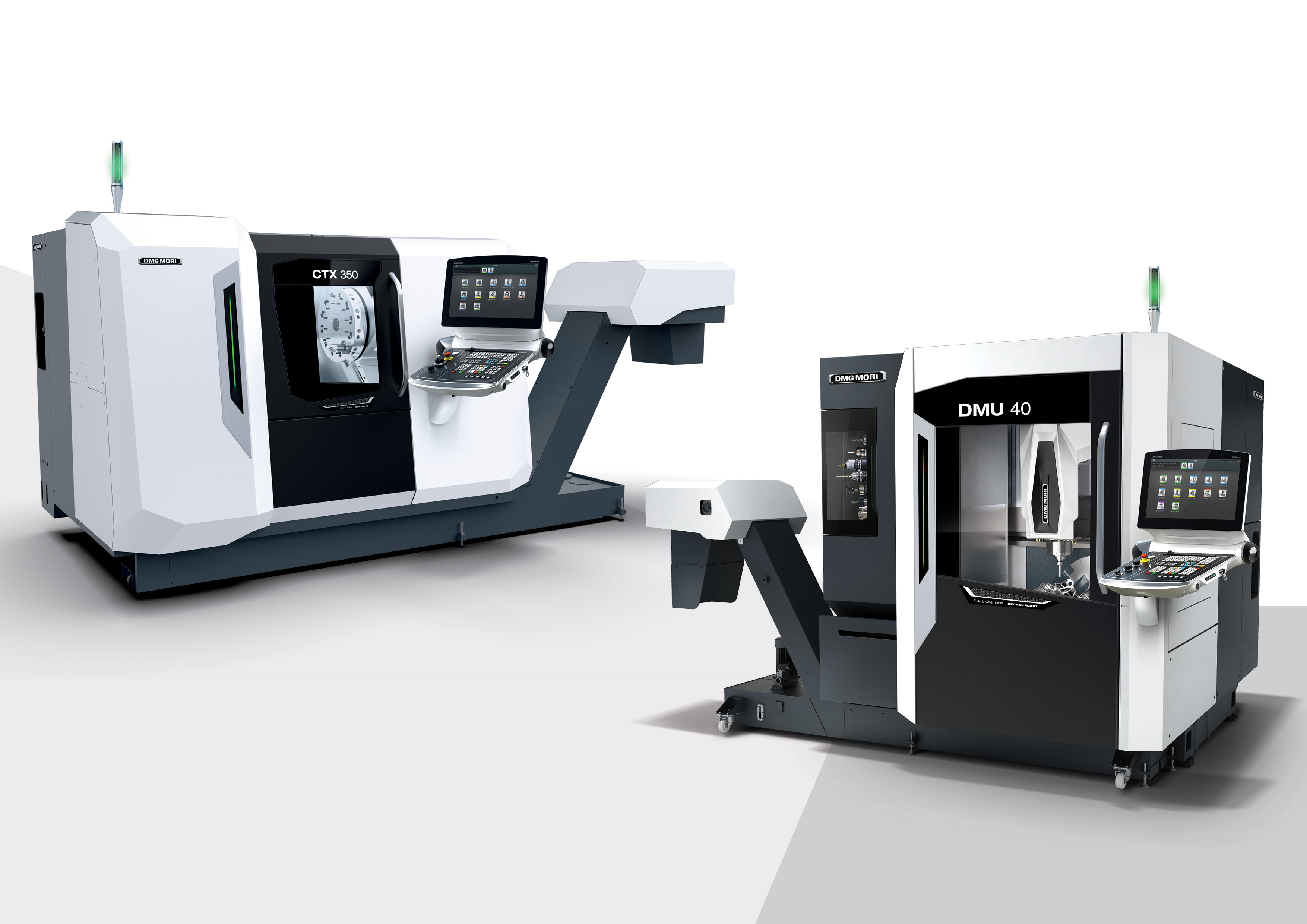
27 machines for CNC turning and CNC mill-turning

The complex machining tasks that participants face during WorldSkills require a high degree of precision and technical expertise, as well as a structured approach to work. This is because the competition demands mastery of both the machines and the manufacturing processes under time pressure. As with past events, the competitions in Shanghai were characterized by professionally executed work of the highest caliber.
Twenty-one competitors took part in the CNC turning event. Liao Junjie from China prevailed against the international competition. He won the event ahead of Ryoto Katano from Japan and Muhed Ali Mirza from Korea. DMG MORI provided 13 CTX 350 V4 machines for this competition. In the CNC milling competition, 23 competitors tested their skills on a total of 14 DMU 40 Plus machines. Li Zhuoping, also from China, took first place. Silver and bronze went to Manuel Nussbaumer from Switzerland and Alisson Gabriel Genova de Oliveira from Brazil.
Additive Manufacturing: Cross-Border Collaboration
DMG MORI also supported WorldSkills 2026 in the Additive Manufacturing competition. The collaboration took place online with a German-Japanese team from the machine tool manufacturer. The workpieces designed by the competitors were prepared using Siemens NX for 3D metal printing via the SLM process. The team then printed the components in Japan. They were then shipped by express courier to Shanghai for the competition. The manufacturing process thus combined digital collaboration, additive manufacturing, and logistics across multiple countries. Alexis Aubert from France won the gold medal in Additive Manufacturing in the final evaluation. His two competitors, Nobutada Miyado from Japan and Oliver Coombs from the United Kingdom, won the silver and bronze medals, respectively.
Commitment to the Skilled Workers of Tomorrow

For Sebastian Plau, Head of Global Education Projects at DMG MORI, the significance of WorldSkills extends far beyond the competitions themselves. “The competitions have a major impact on participating schools and companies, helping them to sustainably improve the quality of their vocational training.” The skills relevant to vocational training are jointly discussed and continuously refined by WorldSkills experts worldwide. As a result, the competition tasks are closely aligned with real-world practice and industry requirements. When schools adopt these standards, it benefits not only WorldSkills participants but all students. “This improves vocational training in the long term, even in areas where it has traditionally been more theory-oriented,” says Sebastian Plau. At the same time, the biennial event underscores the importance of a solid vocational education. “Enthusiasm for technical professions is a key factor for the future of industrial production.”