More stable production processes for screws, implants, and instruments
The medical technology industry is placing increasing demands on machining. High precision, reproducible quality, stable mass-production processes, and robust documentation are required. At the same time, product variety, cost pressures, and the demand for skilled workers are on the rise. For CNC manufacturers, it is therefore crucial to determine how medical technology components can be produced productively while ensuring process reliability, traceability, and audit readiness.
In this context, DMG MORI is placing greater emphasis on its concepts for production turning in the medical technology sector. The focus is on integrated manufacturing solutions that combine turning technology, counter-spindle machining, powered tools, Y-axes, automation, and process data into stable production architectures. The goal is to replace fragmented process chains involving multiple machines, manual setup changes, and a high proportion of manual handling with consolidated, automatable turning processes.
Production Turning as an Integrated Process Platform
In medical technology, precision on a single machine is not enough. The key is to combine repeatable series production processes with automation, process data, and verifiable manufacturing logic. This is precisely where DMG MORI comes in with production turning. The innovation leader in the global machine tool industry defines production turning as a portfolio of horizontal turning platforms for the productive, complete machining of rotationally symmetric and complex components. Depending on the application, high-tech machines equipped with a main spindle, counter spindle, multiple tool carriers, driven tools, a Y-axis, and bar-feeding capabilities are used. This allows multiple machining steps to be performed in parallel, reducing non-productive time. Above all, however, components can be processed in a continuous workflow from raw material to the fully machined workpiece.
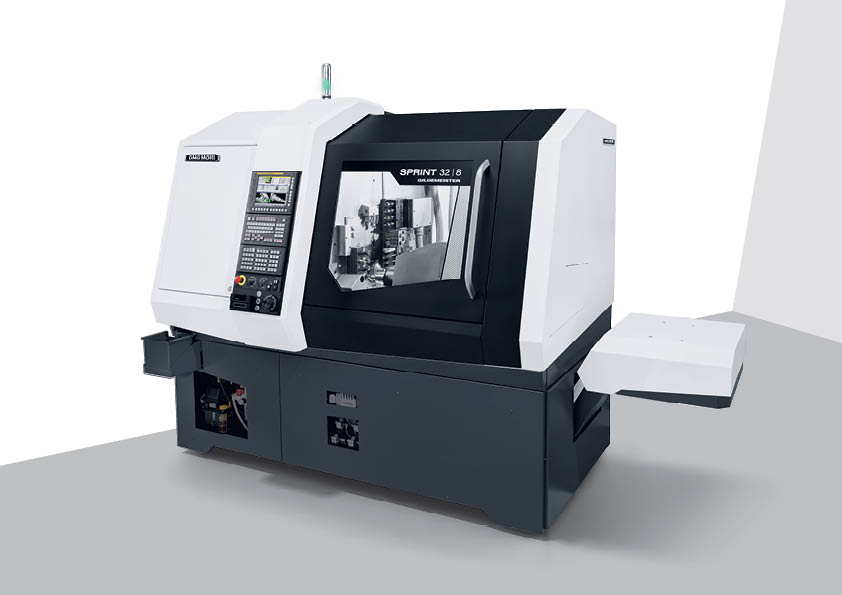
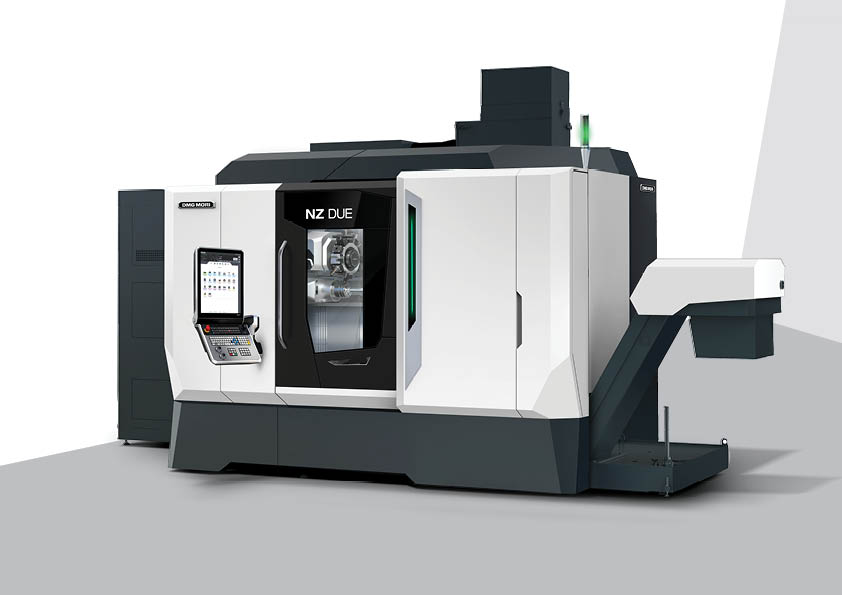
For medical technology applications, DMG MORI combines this machine portfolio with industry-specific process design. Of particular note here are SPRINT long-turn automatic lathes and compact production lathes for bar-fed small parts such as screws and dental implants; MULTISPRINT concepts for high-productivity variant production; NZ and NZX platforms for more complex instrument components; and turn-mill solutions for precision device components.
Off-the-shelf bone screws

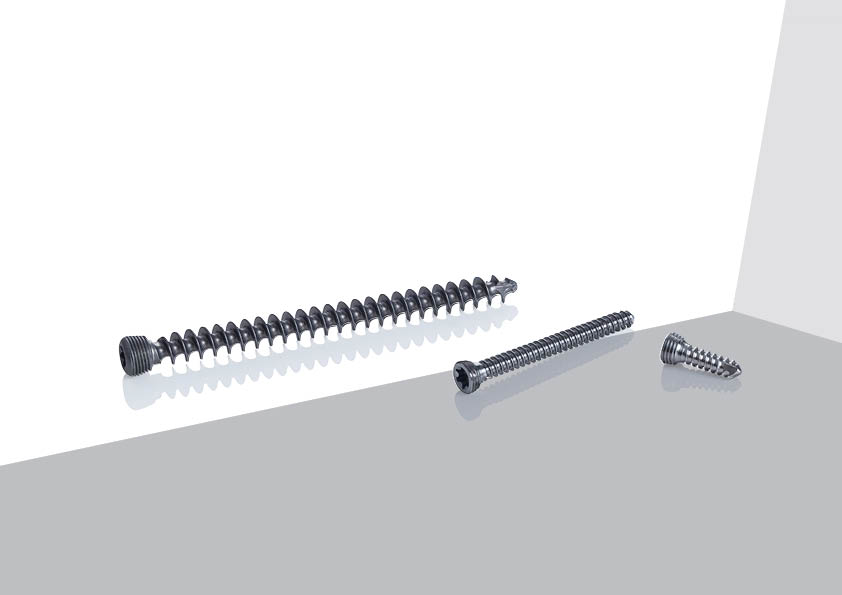
Titanium bone screws place high demands on dimensional accuracy, surface quality, and process stability. SPRINT long-turn automatic lathes with bar feeders and the SWISSTYPE option are suitable for medium- to large-volume production runs where the shank contour, threads, chamfers, and head geometries need to be machined with fewer reclamping and handling steps.
The combination of a rigid machine structure, dynamic axes, optimized clamping technology, and high tool capacity ensures stable machining conditions even for slender geometries that are prone to vibration. For users, this results in shorter process chains, clearly definable machine states, and better conditions for process monitoring and documentation.
Dental Implants with a Wide Range of Customization Options
Dental implant systems made of titanium alloys require tight tolerances, stable coaxiality, and repeatable internal and external geometries. Compact production lathes, such as the MULTISPRINT series featuring a main spindle, counter spindle, Y-axis, and driven tools, enable the integrated machining of internal threads, external profiles, and connecting contours.
A high tooling capacity supports a variety of diameters, lengths, and thread pitches within defined variant families. This allows for more efficient preparation of product changeovers, reduces downtime, and ensures more consistent production runs.
Instrument Components on the NZ and NZX Platforms
Complex machine tool components such as handles, hinge parts, fasteners, and interlocking profiles benefit from production lathes in the NZ and NZX series. Main and counter spindles, multiple turrets, Y-axes, and powered tools enable front- and rear-side machining, cross holes, flat surfaces, and contours in a largely integrated process.
Parallel machining on multiple tool carriers shortens cycle times and reduces internal transport and handling steps. At the same time, complete machining on a single machine improves the geometric consistency of the components. Combined with process monitoring, measurement systems, and documentable process data, this creates better conditions for quality-assured series production in the regulated medical environment.
Turn-mill for Precision Equipment Components
DMG MORI also offers precisely tailored production turning platforms for rotationally symmetric machine components with additional milling sections. The range of components includes shafts, housings, coupling elements, and components for medical drive and handling systems. Round contours, flat surfaces, grooves, and hole patterns can thus be produced in a coordinated machining sequence.
Process integration reduces the need for re-clamping and promotes concentricity, dimensional stability, and repeatable machining conditions. Collected process, tool, and workpiece data can be utilized for traceability, quality assessment, and audit-ready documentation.
Cost-Effective Manufacturing Thanks to Complete Machining

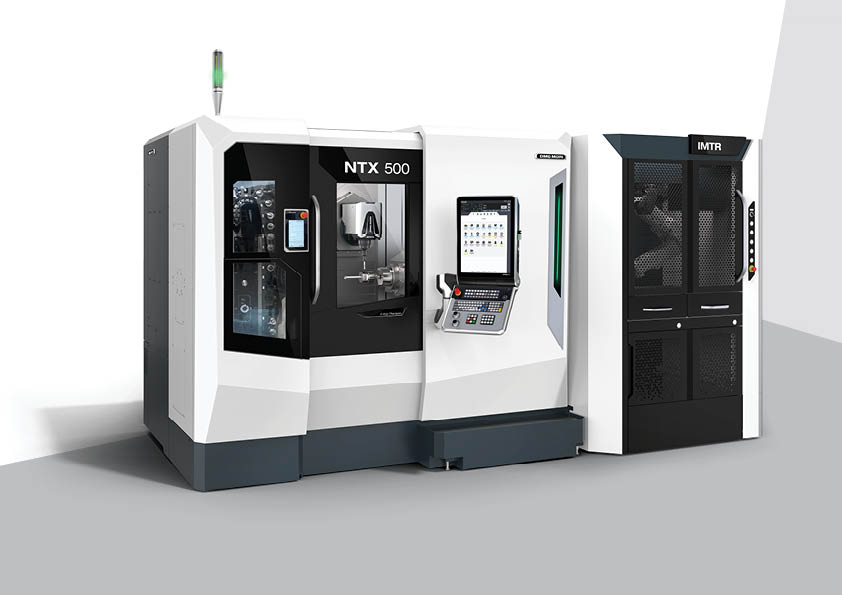
As a result, production turning meets requirements that are also standard practice in other areas of medical technology. DMG MORI has already demonstrated this in numerous projects. Process-integrated manufacturing is increasingly regarded as the standard in many fields because it is efficient and contributes to high precision. The production of implants or medical devices on the NTX 500 clearly illustrates this. The compact turn-mill center enables cost-effective, quality-oriented 6-side complete machining. Integrated robotic automation (IMTR) further increases productivity as needed.
Automated Manufacturing Cells for Medical Series Production
Depending on the component, lot size, and variant structure, production rotary platforms such as SPRINT, MULTISPRINT, ALX, or even NZ and NZX can be expanded into automated manufacturing cells with bar feeders, robotics, and peripherals. Washing, measuring, marking, or handling units can be added as needed, provided that process and component requirements call for them.
The tight integration of machines, automation, and peripherals improves space efficiency and relieves skilled workers of repetitive loading and unloading tasks. At the same time, it generates structured process and workpiece data that supports transparent mass production and simplifies regulatory compliance processes.
From Machine Concept to a Qualifiable Production Process
In all cases, DMG MORI provides medical technology users with holistic and comprehensive support—from selecting the appropriate machine or platform, through automation and peripherals, to the design of qualifiable series production processes. This includes greenfield and brownfield consulting, production planning, technology design, process development, commissioning, and service during ongoing production operations.
Production Turning as a Solution to Medical Requirements
Through Medical Excellence Centers such as those in Seebach and Wernau, DMG MORI brings together expertise and experience in machinery, applications, automation, digitization, and process know-how for medical technology applications. This creates a unique, comprehensive approach that offers concrete solutions to the key challenges facing the medical technology industry of the future. This ensures cost-effective series production, consistent quality, reduced manual intervention, transparent process statuses, and improved conditions for traceability and audit readiness.